Technical Analysis and Application Scenarios of Intelligent Variable Frequency Pumps
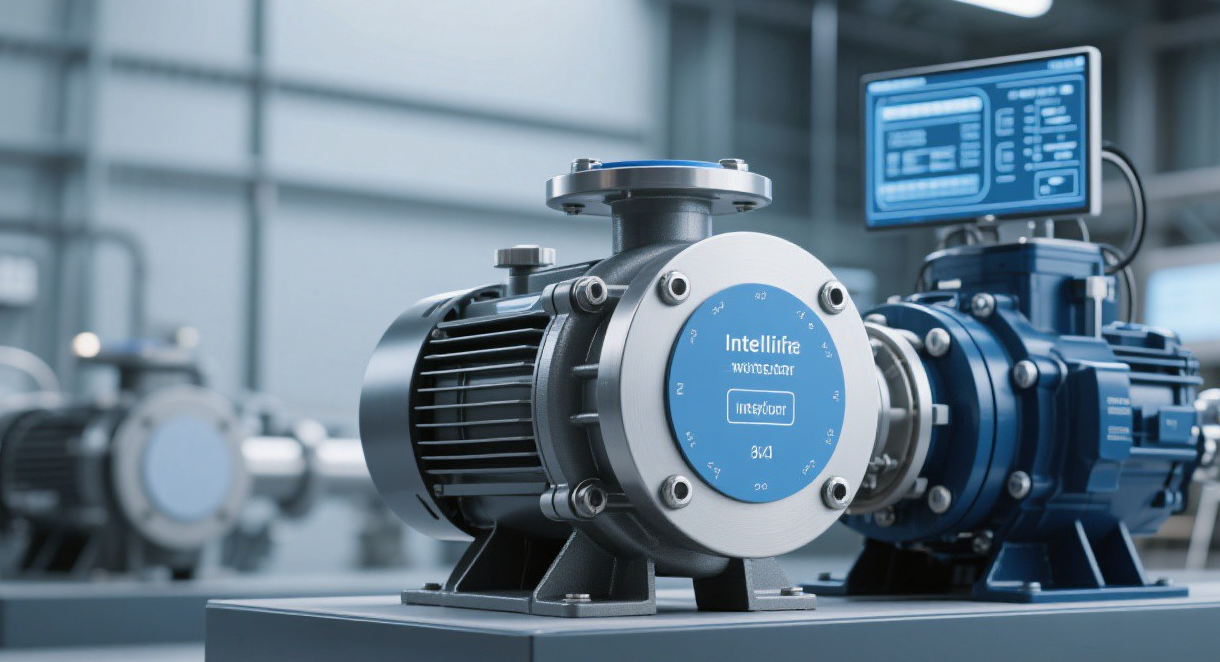
Intelligent variable frequency pumps are integrated energy-saving equipment combining variable frequency speed regulation, intelligent control, IoT, and AI. The core is on-demand speed regulation, constant pressure/flow, predictive maintenance, and multi-pump coordination, which has become the mainstream configuration in municipal, industrial, construction, agricultural, and liquid cooling scenarios.
Intelligent variable frequency pumps are integrated energy-saving equipment combining variable frequency speed regulation, intelligent control, IoT, and AI. The core is on-demand speed regulation, constant pressure/flow, predictive maintenance, and multi-pump coordination, which has become the mainstream configuration in municipal, industrial, construction, agricultural, and liquid cooling scenarios. In 2026, it is entering an explosive period of whole-machine integration, deep AI embedding, high-end domestic substitution, and service-oriented transformation. I. Core Principles and Value 1. Variable Frequency Speed Regulation Principle (Energy Saving Core) Pump power is proportional to the cube of speed (P∝N³): 10% speed reduction reduces power by about 27%; 50% reduction reduces power by about 87%. Intelligent frequency conversion uses PWM/vector control to adjust frequency in real-time, making pump output exactly match demand, avoiding "big horse pulling small cart". Compared to traditional fixed-frequency pumps: 20%–50% electricity savings, 3%–10% water savings, stable pipeline pressure, significantly reduced pipe bursts/leaks. 2. Core Intelligent Control Capabilities Constant pressure/flow/variable pressure control: dynamically adjust pressure according to pipeline/end demand, adapting to peak/valley periods. Multi-pump AI optimization: millisecond-level calculation of optimal start-stop/frequency combinations, eliminating "efficiency depressions", system efficiency increased by another 10%–15%. Predictive maintenance: built-in vibration/temperature/energy consumption sensors, AI identifies fault precursors, downtime losses reduced by 70%+. Digital twin: full life cycle modeling, remote simulation, optimization, and diagnosis. Cloud-edge collaboration: local edge computing + cloud AI, intelligent operation still possible offline. II. Mainstream Application Scenarios (2026) 1. Municipal Water Supply (Largest application, ~45% share) Secondary water supply/high-rise residential: constant pressure water supply, low night power consumption, anti-negative pressure, anti-pipe burst, 30%+ energy savings. Smart water: pipeline leakage monitoring, district metering, multi-pump station coordinated dispatching, leakage rate reduced from 15%–20% to 8%–12%. Typical solution: one use one standby/two use one standby + AI rotation + remote monitoring. 2. Industrial Sector (~30% share) Chemical/petrochemical/metallurgy: corrosion resistance, explosion-proof, leak-proof, precise flow control, adapting to high temperature/high pressure/corrosive conditions. Water treatment/sewage treatment: aeration pumps, circulation pumps, sludge pumps, automatic speed adjustment based on water quality/flow, energy consumption reduced by 15%–25%. Manufacturing cooling/circulation: precise temperature control, multi-pump coordination, predictive maintenance, downtime reduced by 40%+. 3. Building HVAC (Fastest growth) Central air conditioning/two-pipe system: permanent magnet variable frequency canned pumps (IE5+), adaptive speed regulation, silent (35dB), system energy efficiency ratio increased by 20%+. Hot water circulation: instant hot water, on-demand circulation, avoiding waste, 40%+ energy savings. 4. Agricultural Irrigation (Water-saving刚需) Micro-sprinkler/drip irrigation/farmland irrigation: constant pressure/variable pressure, district control, water-fertilizer integration, remote dispatching, 15%–25% water savings, 15%+ electricity savings. Smart farm: combined with meteorological/soil moisture, AI automatic start-stop/speed adjustment. 5. Emerging Explosive Scenarios (2026) AI computing power/liquid cooling: data center single cabinet 100kW+, liquid cooling penetration rate over 50%, liquid cooling variable frequency pumps become core components, growth rate 100%+. New energy: surge in demand for pumps supporting photovoltaic/wind power/energy storage, hydrogen energy transfer pumps, charging pile cooling pumps. Marine/deep sea: seawater desalination, deep sea exploration, offshore platform special variable frequency pumps, resistant to high pressure/corrosion/salt spray.